

Protecting wooden items during transport – How to
Protect wooden furniture by checking for weak parts, cleaning and disassembling it where safe, then covering it with soft padding before adding stronger outer protection. Keep every piece dry, secure it against movement, lift it from stable structural points, and allow it to adjust gradually after delivery to reduce scratches, moisture damage, broken joints, and finish problems.
Protecting wooden items during transport starts with inspecting each piece, removing detachable parts, covering the surfaces with clean furniture pads, reinforcing exposed corners, and securing everything inside the truck. This matters in the UAE, where summer temperatures commonly reach 35–41°C and humidity can range from 60–100%, increasing the need to keep wood dry and protected from prolonged environmental changes. These steps help save wooden items during the move by preventing scratches, water damage, dents, loose joints, and damaged veneer. GI Movers UAE explains how to protect wooden items during packing, loading, transport, unloading, and reassembly.
Table of contents
Why is protecting wooden items during transport so important?
Wood is a porous material that absorbs and releases moisture as conditions change. Prolonged dampness can contribute to swelling, staining, finish damage, or mould growth, while dry conditions can contribute to furniture deterioration. Physical damage is also common when furniture shifts, rubs against another object, or is lifted from a weak part. The most vulnerable points are usually surfaces, joints, corners, and projecting details.
- Surface damage – Dust, grit, rough cardboard, dirty blankets, and contact with other items can scratch polished, painted, varnished, or veneered surfaces.
- Joint damage – Chair backs, table legs, cabinet doors, handles, and shelves may loosen or break if they are used as lifting points or placed under pressure.
- Impact damage – Corners, feet, carved sections, and projecting details can chip or snap if the furniture moves inside the truck.
- Finish and veneer damage – Water can stain unfinished wood or leave cloudy marks on some finishes, while unsupported veneer edges may lift or crack.
- Irreplaceable details – Antiques and handmade items may contain original finishes, joinery, or decorative work that cannot be reproduced accurately.
Protection must continue through every stage of the move, rather than focusing only on the time spent inside the truck. This level of planning is particularly important when moving high-value items in Dubai Marina, where antique, custom-made, or delicate furniture may be difficult to repair or replace.
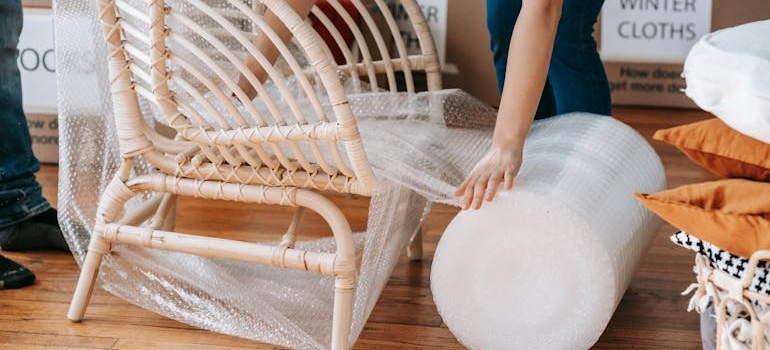
How should you prepare wooden furniture before moving?
Inspect before disassembly so weak parts and existing damage are identified before the furniture is lifted. Before you even reach for a box or wrap to pack wooden furniture, follow these steps:
Inspect the furniture for loose joints, unstable legs, weak handles, lifting veneer, damaged shelves, glass, marble, or existing cracks. Photograph each piece before disassembly so you have a record of its condition and how the parts fit together. A clear condition record can help save wooden items during the move by showing which areas already need extra support.
Empty drawers, cabinets, and shelves completely; do not use the furniture itself as a moving box. Measure doors, corridors, staircases, corners, and lift openings before moving large pieces. Where it can be done safely, remove glass or marble tops and protect them separately. A few minutes of preparation can prevent avoidable handling problems later.
- Clean your wooden items. Dirt and dust can act like sandpaper during a move, causing scratches. Use a clean, soft cloth and make sure the surface is dry before wrapping it.
- Disassemble where possible. Remove legs, drawers, shelves, or knobs when the furniture was designed to come apart. Do not force antique joints, glued components, or fittings that do not release easily.
- Label everything. Place screws, bolts, brackets, shelf pins, and other hardware in labelled bags. Keep each bag with the matching wrapped furniture piece.
- Secure moving parts. Drawers or doors should be tied or taped shut with furniture-safe materials. Apply tape to the wrapping material rather than directly to painted, polished, varnished, or veneered wood.
Which packing material should touch wooden furniture?
Compare where each material belongs and what to avoid when protecting wooden surfaces.
| Material | Best for | Layer | On wood? | Avoid |
|---|---|---|---|---|
| Moving blankets | Tables, chairs, cabinets | First layer | Clean only | Grit, tears, metal clips |
| Foam sheets | Polished wood, veneer | First layer | Smooth only | Pressure on carvings |
| Bubble wrap | Legs, handles, loose parts | Over soft padding | Delicate finishes | Tight wrapping |
| Corner protectors | Edges, frames, corners | Over soft layer | No | Loose fit |
| Cardboard | Panels, shelves, doors | Outer support | No | Damp or rough edges |
| Stretch wrap | Holding padding | Outermost layer | No | Overtightening |
| Small boxes | Hardware, knobs, pins | Labelled package | Not applicable | Loose parts |
| Boxes or crates | Décor, panels, small items | Transport container | No | Empty space inside |
Do not use plastic or stretch wrap as the only layer against polished, antique, recently finished, or moisture-sensitive wood. Place a clean moving blanket, furniture pad, soft cloth, or smooth foam sheet against the surface first. The plastic film should hold the protective layers together, not act as the main padding.
How do you wrap wooden furniture for transport?
When protecting wooden items during transport, use the wrapping materials in the correct order:
- Cover the wooden surface. Use a clean moving blanket, furniture pad, soft cloth, or smooth foam sheet as the first layer. Cover the top, sides, base, and any exposed wooden sections.
- Add impact protection. Place foam or bubble wrap around legs, handles, carvings, and other details that could be damaged by a knock.
- Reinforce vulnerable areas. Position cardboard or foam protectors around corners and edges without pressing them into veneer, ornamentation, or fragile joints.
- Secure the protective layers. Apply stretch wrap over the blanket or padding. Use enough tension to hold the covering in place without compressing panels or decorative parts.
- Control movement. Place small items and removable parts in boxes that allow cushioning on every side. The contents should not slide when the closed box is moved gently.
A consistent wrapping sequence can help save wooden items during the move. Adapt the wrapping to the furniture. Protect a table’s top and corners, and remove its legs only if the construction permits it. Wrap chair backs, arms, seat rails, and legs separately, but never use the arms or backrest as lifting points. Empty cabinets, remove loose shelves, and keep the doors controlled. Build padding around fragile details instead of tightening wrap across them.
Label separated parts clearly and keep their fittings together. Useful labels include “Keep Upright,” “Do Not Stack,” “Keep Dry,” “Fragile,” and “Hardware Enclosed.” Before loading, check that no wooden surface, corner, handle, leg, or carved section remains exposed.
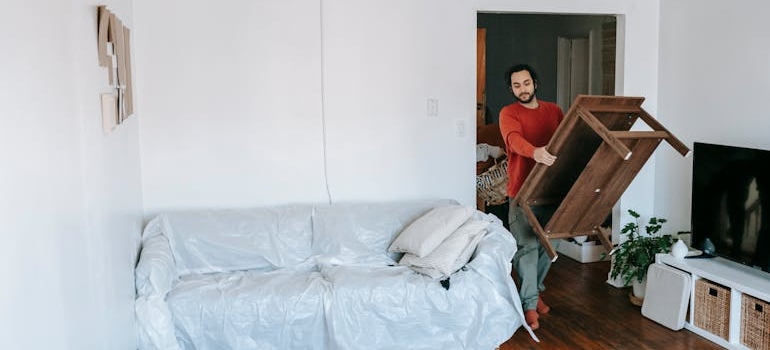
How should wooden furniture be loaded into a moving truck?
Correct loading is as important as wrapping because braking, turns, vibration, and uneven roads can make unsecured furniture slide or strike nearby items. The same planning used for handling bulky items when moving internationally applies to large wardrobes, cabinets, tables, and headboards:
- Load heavy, stable furniture before lighter and more fragile pieces.
- Keep wardrobes and cabinets empty and upright. Place tables on a padded, stable surface and never rest furniture on handles, chair arms, narrow legs, doors, or carved projections.
- Remove marble tops and transport them vertically with separate padding. Protect removable glass panels or tops in the same way.
- Avoid stacking boxes, appliances, tools, or other heavy items on tables, chair seats, cabinet tops, or wooden panels.
- Use padded tie-downs or ratchet straps to prevent movement without pressing them directly against the finish.
- Use a clean, dry, covered truck or trailer and protect the load from rain, leaks, dirt, and extreme environmental changes.
Correct placement and restraint help save wooden items during the move. Before loading, inspect the cargo area for water, sharp edges, exposed fasteners, and loose equipment. Place moving blankets between the furniture, the truck walls, and neighbouring pieces. Run straps across broad, padded, structurally stable areas such as a wrapped cabinet body or table frame. Straps should restrain the furniture without pressing into weak or decorative parts.
Tighten each strap enough to stop movement, but not enough to dent panels, crush padding, or pull joints out of alignment. Fill open gaps with secured padding so the furniture cannot slide. Before departure, push each protected piece gently by hand. It should not rock, shift, or touch an unpadded surface.
What mistakes can damage wooden furniture during a move?
Many problems result from preventable packing and handling mistakes rather than a major accident. Be sure to avoid these:
- Wrapping wood directly in plastic without a soft separating layer, which provides little protection from abrasion and may hold moisture against recently finished, antique, lacquered, or veneered surfaces.
- Using dirty or damaged blankets, because grit, metal clips, exposed fasteners, and rough seams can scratch or dent the finish.
- Using old, flimsy boxes with no padding, which may collapse or allow shelves, hardware, and small parts to collide.
- Leaving drawers or cabinets full, which adds weight, makes the furniture harder to control, and allows the contents to strike internal surfaces.
- Skipping edge protection, leaving corners, feet, handles, and carved details exposed to chips, dents, and impact.
- Forgetting to check for moisture or leaks in the truck, which can expose the wood and its finish to water damage.
- Rushing through disassembly and losing small parts, making correct and secure reassembly more difficult.
- Dragging furniture or lifting it by weak parts, such as chair backs, arms, handles, or a tabletop edge, which places unnecessary stress on joints.
Small shortcuts can create damage that only becomes visible after delivery. Avoiding these common errors helps save wooden items during the move and reduces the risk of scratches, loose joints, broken details, water damage, and missing fittings. The same goes when storing the wooden furniture in a professional storage.
How can you protect wooden furniture until the move is complete?
To save wooden items during the move, keep the wrapping in place until each piece reaches its intended room. Before unloading, check for loose straps, shifted blankets, exposed corners, wet packaging, crushed boxes, detached hardware, or new marks.
Use the strongest parts of the furniture when lifting. Carry a chair from both sides of the seat rather than the arms or backrest. Support a cabinet from its base rather than pulling it by the doors or handles. Lift a table by its apron or other strong frame components rather than placing all the force on the top edge. These carrying principles are especially important when relocating furniture in Abu Dhabi through lifts, staircases, narrow entrances, and tight interior corners. The item should remain level and under control throughout the carry.
After unpacking, inspect the finish, corners, legs, fittings, joints, doors, and drawers before reassembly. If a joint is loose, a panel has shifted, or hardware no longer aligns, stop rather than forcing the components together. Confirm the correct part locations using your photographs and labels before tightening the fittings.

When should you use furniture installation services?
When the move is done, don’t risk damaging your wooden pieces during reassembly. Professional furniture installation services help ensure everything is put back together correctly and safely. Whether it’s a delicate antique cabinet or a solid wood table, correct reassembly protects structural stability.
Professional installation is particularly useful for large wardrobes, fitted furniture, heavy solid-wood tables, and pieces with glass panels, stone tops, concealed fixings, delicate joints, or specialist hardware. It is also the safer choice when two or more people must hold sections in position, when doors and drawers require alignment, when a tall unit must be levelled or anchored, or when reassembly affects the structural stability of the piece. Specialist help is most valuable when alignment or stability cannot be checked easily.
The work may include reconnecting frames, refitting shelves, reinstalling drawers, aligning doors, tightening hardware, levelling the furniture, and reattaching protected glass or stone components. If fittings do not align or a joint appears damaged, the piece should be assessed before screws, bolts, or panels are forced into place.
How can GI Movers UAE help protect your wooden furniture?
Protecting wooden items during transport comes down to careful preparation and controlled handling. Each piece should be wrapped according to its finish, shape, weight, and vulnerable parts, with no loose movement inside the vehicle. GI Movers UAE can help manage the process from packing and transport to final installation. Professional support is especially useful for heavy, fragile, or difficult-to-reassemble furniture. To discuss your move, request advice, or arrange professional support, contact us and plan the safest way to save wooden items during the move.
Frequently asked questions and answers
Testimonials

Recently moved our one-br apartment through GI Movers. Team was courteous, professional and quite dedicated. It was a great end-to-end experience. Glad we made the right choice this time after struggling with multiple other movers on previous occasions. Definitely recommended!
Ali Khan
