
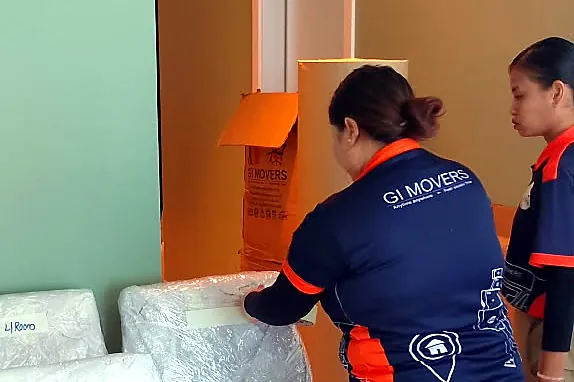
Professional movers pack a kitchen item by item: plates are wrapped and stood on edge, glasses go into divided boxes, knives are sheathed and labelled, appliances are cleaned and secured, and the fridge is defrosted the day before. It is usually the room with the most boxes and the most fragile items, so it is packed first and unpacked first.
Before the packers arrive
A little preparation in the days before moving makes kitchen packing faster and safer.
- Run down the pantry and freezer. Plan meals for the last week around what you already have, and buy only what you’ll use.
- Clear out what you won’t take. Chipped mugs, duplicate utensils, old containers and gadgets you never use don’t need wrapping.
- Set aside an “open first” kitchen box. A kettle, a pan, a few plates, cups, cutlery, a knife, washing-up liquid, a sponge and tea towels are enough for the first days.
- Wash and dry everything that is going to be packed, including the inside of the fridge, oven trays and the microwave plate.
Crockery
Plates, bowls and serving dishes are the items most likely to break if packed badly. The method professional packers use:
- Line the bottom of a strong box with crumpled paper or padding.
- Wrap each plate individually in packing paper. Nest small bowls in paper before wrapping them in a bundle.
- Stand plates on edge, like records in a rack, rather than stacking them flat. On edge they handle the bumps of the road far better.
- Fill every gap with paper so nothing moves when the box is shaken gently.
- Put heavy items at the bottom and lighter ones on top, and keep boxes to a weight one person can lift safely.
Glassware and stemware
- Use boxes with cardboard dividers for glasses, so each one sits in its own cell.
- Stuff the inside of each glass with paper, then wrap the outside.
- Wine glasses and stemware get extra wrapping around the stem, where they break most often.
- Pack glasses upright, with the heaviest at the bottom, and label the box “Fragile – this way up”.
Knives and sharp items
Knives are packed for the safety of the crew as much as for the knives.
- Wrap each blade in thick paper or cardboard and tape it, or use the original blade guards.
- Bundle knives together and mark the bundle clearly as sharp.
- Knife blocks can travel with knives removed and packed separately.
- Graters, mandolines, scissors and skewers should be wrapped the same way.
Small appliances
- Clean and dry each appliance, and empty water from kettles and coffee machines.
- Remove loose parts such as blender jars, mixer bowls and microwave plates, and wrap them separately in the same box.
- Coil and tape cables to the appliance so they don’t catch.
- Use original boxes where you still have them; otherwise wrap in padding and pack firmly.
Large appliances and the fridge
Large appliances need a bit of planning, and the fridge most of all.
- Fridge and freezer: empty, switch off and defrost at least a day before the move. Wipe out the water as it melts, leave the doors slightly open to dry and stop smells, then remove or tape the shelves and trays. Fridges should be moved upright. At the new home, many manufacturers advise letting the fridge stand for a few hours before switching it on; check your model’s manual.
- Washing machine: drain it and fit the transit bolts if you still have them. These stop the drum moving on the road.
- Dishwasher: run an empty cycle a day or two before, drain it and leave the door open to dry.
- Cooker: remove racks and trays, and clean the oven. Gas cookers should be disconnected by a qualified person.
Disconnecting and reconnecting plumbing, gas and built-in appliances may need a technician. Ask your movers in advance what their crew can do and what needs a specialist.
The pantry
- Pack only unopened dry goods and sealed jars. Throw away or give away opened packets of flour, rice and similar items.
- Tape the lids of spices, oils and sauces, and put them in sealed bags in case anything leaks.
- Don’t pack aerosols, cleaning chemicals or anything flammable. Use them up or dispose of them properly before moving.
- Perishable food should travel with you in a cool box, not in the truck. On summer days in the UAE, heat inside a truck can spoil food quickly.
Labelling kitchen boxes
Good labels make unpacking much quicker. Each kitchen box should show:
- The room: “Kitchen” (or “Pantry” if your new home has a separate one)
- The contents: “Dinner plates”, “Glasses”, “Baking trays”, not just “Kitchen stuff”
- Handling notes: “Fragile”, “This way up”, “Sharp”
- Priority: mark the boxes you need on day one so they are unloaded and opened first
Write the label on the top and at least one side, so it can be read when boxes are stacked.
Unpacking at the new home
Professional packing and moving services usually come with an unpacking option. With it, the crew unwraps the kitchen, puts items into cupboards and takes away the packing paper and empty boxes. If you prefer to unpack yourself, start with the “open first” box and the day-one boxes, then work through crockery and glassware once the shelves are clean.
FAQ
How long does it take to pack a kitchen?
It depends on the size of the kitchen and how much is in it. Most apartment kitchens are packed within a few hours by an experienced crew; large villa kitchens take longer.
Can I leave things in the kitchen drawers?
Fitted kitchen drawers stay with the property, so everything in them must be packed. For freestanding units, ask your movers; most prefer them emptied.
Will you move my fridge and washing machine?
Yes. GI Movers moves household appliances as part of a house move. Make sure they are defrosted, drained and disconnected in time.
Should I pack the kitchen myself to save time?
You can, but the kitchen has the most fragile items in the home. Many people pack books and clothes themselves and leave the kitchen to the movers.
Moving home in Dubai or Abu Dhabi? See our home movers in Dubai and residential movers in Abu Dhabi. Book a free home survey or send photos on WhatsApp for a quote, or get an instant estimate with our price tool.