

Movers and Packers in Dubai
Looking for reliable expert movers in Dubai? Gi Movers offers professional packing and moving services. Stress-free relocation for homes and offices in Dubai.
GI Movers moves apartments, villas and offices across Dubai, with our own trucks, our own trained crews and our own warehouse in Dubai Investment Park. We have been moving families and companies in the UAE since 2013, and Dubai customers rate us 4.9 out of 5 on Google.
From a one-bedroom in a Dubai Marina tower to a villa in Arabian Ranches or a full office in Business Bay, you get a free home visit or video survey, a written quote within an hour, and a team leader with your crew from the first box to the last.
Call 800 44626 · Dubai office +971 4 286 5581 · WhatsApp +971 55 603 6004 · Get a free quote
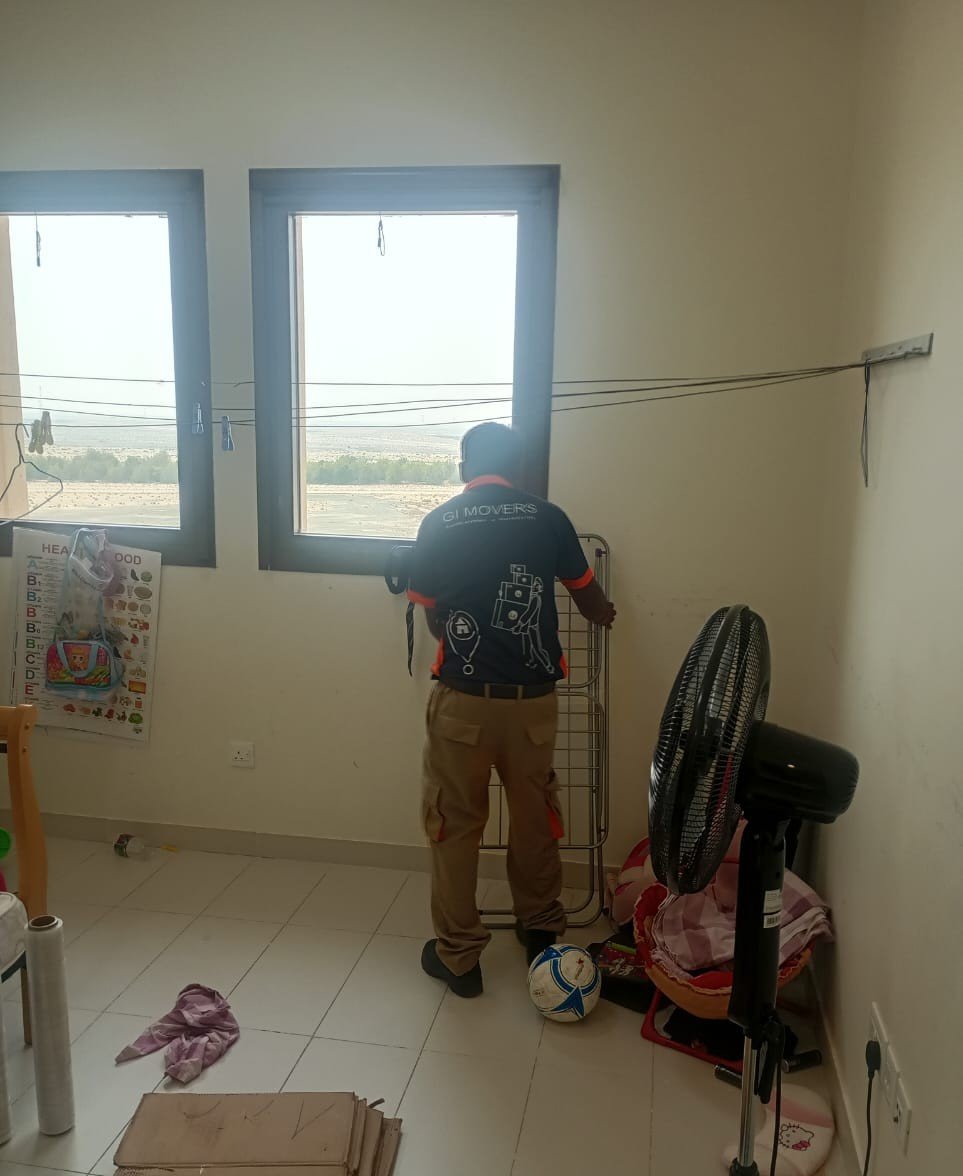
Moving Services in Dubai
- Apartment movers: studio to 4-bedroom moves in Dubai’s towers, with move permits, service-lift slots and building rules handled for you.
- Villa movers: full packing, dismantling and reassembly for villas and townhouses. Most 3–5 bedroom villa moves take one to two days.
- Office and commercial movers: night and weekend office moves, so your team logs off on Friday and starts at the new desks on Monday. See also furniture installation and furniture reconfiguration.
- Furniture movers: single items, a few pieces or a full room, wrapped and handled with care.
- Packing and unpacking: boxes, bubble wrap, wardrobe boxes and crates supplied; we can unpack and place everything at the new home.
- Storage in Dubai: short and long-term A/C and non-A/C storage in our own warehouse in Dubai Investment Park, with pickup and delivery.
- Local and long-distance moves: within Dubai, to Abu Dhabi, Sharjah and the other emirates.
- International movers: export packing and shipping for moves abroad.
- Also: university and library relocation, cargo loading and offloading, handyman services, mobile shelving relocation and junk furniture removal.
How a Move with GI Movers Works
- Free survey. A home visit or video survey to see the real volume and any items that need special care.
- Written quote within an hour. A clear price based on volume, route and service level, with nothing added on the day.
- Building approvals. We tell you what your tower or community needs and book the service lift and loading bay with security.
- Packing day. The crew wraps furniture, packs and labels every box by room, and dismantles beds, wardrobes and large tables.
- Moving and delivery. Everything goes on our own trucks and is placed room by room at the new address. Furniture is reassembled.
- Walk-through. The team leader checks every room with you before the crew leaves.
Dubai moving checklist
- Move permit: most towers need a move-in or move-out permit from building management or the community portal. Apply at least a week ahead.
- Ejari: register your new tenancy contract on Ejari. Moving out, many buildings ask for the Ejari cancellation.
- DEWA: once Ejari is done, apply for move-in activation of water and electricity, and settle the final bill at your old home.
- District cooling: many towers bill A/C separately from DEWA, so open that account too.
- Internet: book du or e& installation a week ahead.
Moving in Dubai Marina? Read more in our Dubai Marina moving guide: tower permits, service lifts and tips.
How Much Do Movers in Dubai Cost?
Every move is priced on three things, all shown in your written quote:
- Volume: how much you are moving, in cubic metres (CBM), measured at the survey.
- Route: within Dubai, Dubai to Abu Dhabi or Al Ain, or to Sharjah and the northern emirates.
- Service level: Basic, Economy, Standard or Premium, depending on how much packing, dismantling and unpacking you want us to do.
Office moves and furniture projects are priced on crew size and hours. Storage starts from AED 50 per CBM per month (non-A/C) and AED 55 (A/C). Prices exclude 5% VAT.
For an instant estimate, try our online quote calculator, or book a free survey for a fixed price.
Areas We Serve Across Dubai
Area guides:
Movers in Dubai Marina · Movers in JBR · Movers in JLT · Movers in Palm Jumeirah · Movers in Downtown Dubai · Movers in Business Bay · Movers in Dubai Hills · Movers in Arabian Ranches · Movers in JVC · Movers in Al Furjan · Movers in Al Barsha · Movers in Bur Dubai · Movers in Mirdif
Residential areas: Bluewaters, City Walk, Emirates Hills, The Springs, The Meadows, The Lakes, The Greens, The Views, Jumeirah, Umm Suqeim, Al Wasl, Al Safa, Al Sufouh, JVT, Discovery Gardens, Jumeirah Park, Jumeirah Islands, Jumeirah Golf Estates, Motor City, Sports City, Arjan, Al Barari, Damac Hills, Damac Hills 2, Town Square, Mudon, Remraam, Tilal Al Ghaf, MBR City, Sobha Hartland, Meydan, Dubai Creek Harbour, Al Jaddaf, Dubai Silicon Oasis, International City, Al Mizhar, Al Khawaneej, Al Warqa, Rashidiya, Al Qusais, Al Nahda, Deira, Karama, Oud Metha, Dubai South and Jebel Ali.
Office and commercial districts: DIFC, Sheikh Zayed Road, Dubai World Trade Centre, Business Bay, Dubai Internet City, Dubai Media City, Barsha Heights (Tecom), JLT (DMCC), Dubai Design District, Dubai Healthcare City, Al Quoz, Dubai Airport Free Zone, JAFZA and Dubai Investments Park.
Why Dubai Residents and Companies Choose GI Movers
- Since 2013: more than a decade of moves across the UAE, with offices in Dubai and Abu Dhabi.
- Our own fleet: 27 company vehicles, not hired trucks.
- Our own crews: trained, uniformed staff led by a team leader on every move.
- Our own warehouse: A/C and non-A/C storage in Dubai Investment Park.
- High-rise experience: permits, lift slots and loading bays planned before moving day.
- Flexible hours: operations run 24/7 for towers that only allow night or weekend moves.
- 4.9 on Google from more than 150 Dubai reviews.
What our customers say
“They came on time, packed everything with extreme care and dedication, stored the items at their warehouse for a few days, then returned everything exactly where it was.”
— Maryam, Google review
“In a 1-bedroom apartment with around six of their team members, they were organized and divided into areas, making the move go smoothly and quickly.”
— Giulia G., Google review
“We moved from Abu Dhabi to Dubai and everything was completed in one day.”
— Mervet M., Google review
“Not the cheapest, but very well organized, professional and well worth the money.”
— Albert V., Google review
Read all our Dubai Google reviews
Customer Story: Moving 900+ Fragrances in Dubai
Dubai fragrance creator Shama (@fragrance_fairy_shama) trusted GI Movers to pack and move her collection of more than 900 fragrances to her new home. Watch her reel:
How to move 900+ fragrances, by @fragrance_fairy_shama with GI Movers
Frequently Asked Questions
How much do movers in Dubai cost?
It depends on the volume (CBM), the route and the service level. A free home visit or video survey gives you a fixed written quote. Prices exclude 5% VAT.
How quickly will I get a quote?
Usually within an hour. For an instant estimate, use the online quote calculator on our website.
Do I need a permit to move in or out of my Dubai apartment?
In most towers, yes. Ask building management or check your community portal at least a week before moving day. We will tell you what your building needs.
How long does a 2-bedroom apartment move in Dubai take?
Usually one day, depending on lift access and the distance to your new home.
Can you move at night or on weekends?
Yes. Our operations run 24/7, so we can work within building moving hours.
Do you provide packing materials?
Yes. Boxes, bubble wrap, wardrobe boxes, blankets and crates come with the crew.
Can you store my furniture between homes?
Yes, in our own A/C or non-A/C warehouse in Dubai Investment Park, with pickup and delivery.
Do you move between Dubai and Abu Dhabi?
Yes, every week. We have offices and crews in both cities and move between all seven emirates.
Book Your Free Moving Survey in Dubai
Tell us where you are moving from and to, and we will send a written quote within an hour, after a free home visit or video survey. For an instant estimate, use our online quote calculator.
- Toll-free: 800 44626
- Dubai office: +971 4 286 5581
- WhatsApp: +971 55 603 6004
- Warehouse: Warehouse 9, Plot 597-4899, Dubai Investment Park 2, Dubai
- Office hours: Monday to Saturday, 8:00 am to 6:00 pm · moves 24/7
Testimonials

Recently moved our one-br apartment through GI Movers. Team was courteous, professional and quite dedicated. It was a great end-to-end experience. Glad we made the right choice this time after struggling with multiple other movers on previous occasions. Definitely recommended!
Ali Khan
